Discontinued Hardware and the Long Tail of Parts Database Coverage
Keeping specs for discontinued parts helps builders using older systems find compatible upgrades.
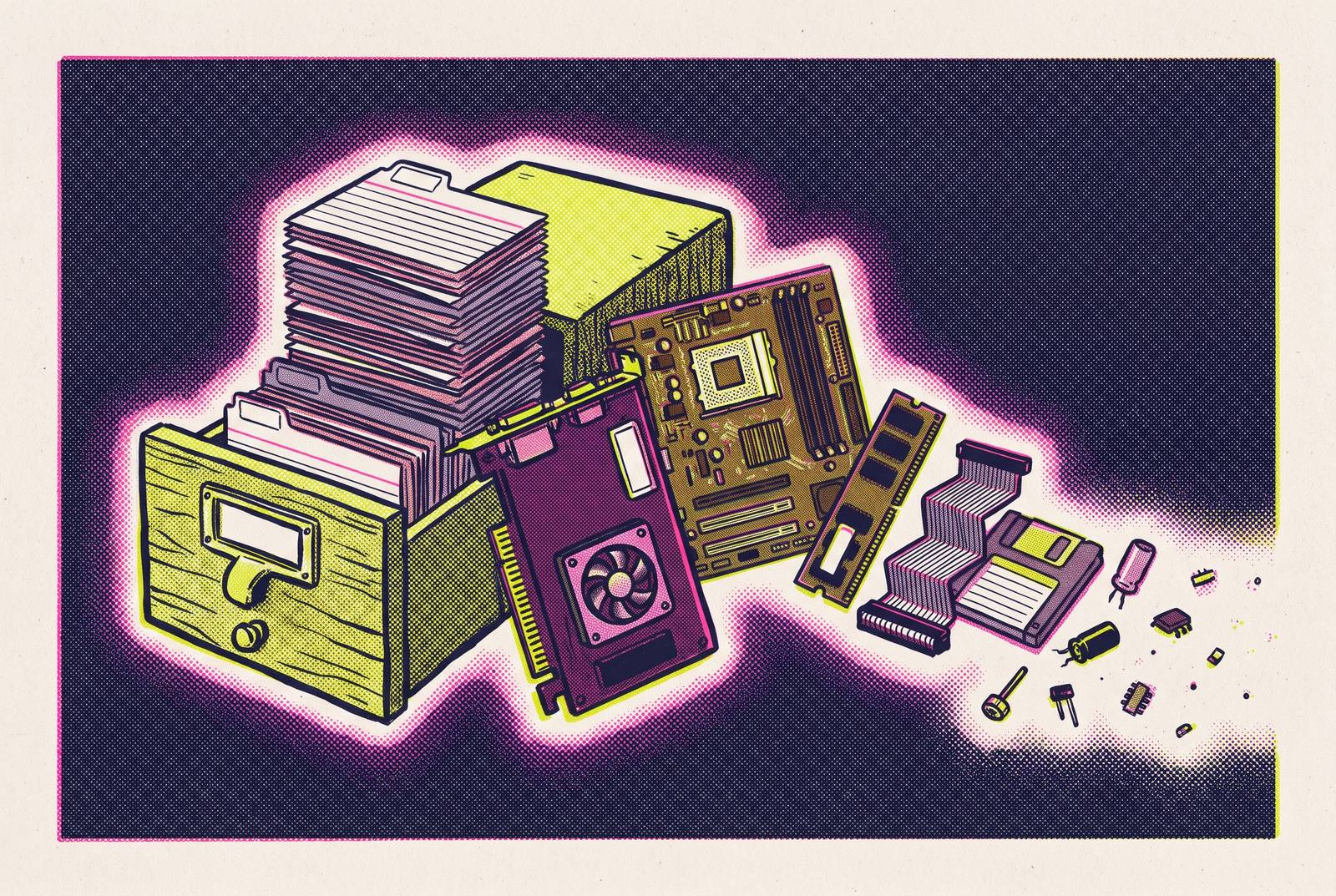
An open-source PC parts database for community builders should let people search for discontinued hardware and find verified specs, a clear lifecycle status, and records with dates. Removing a part when it stops shipping cuts off the upgrade and compatibility research that owners and used-parts buyers still need. Discontinued-hardware coverage is a test of whether a database serves real builds or just current retail.
Why the parts database underneath a build tool is an active curation job, not a one-time engineering task
A parts database starts losing accuracy as soon as active curation stops. Parts go out of production, what buyers can find changes, and advice in an entry that was once up to date starts to lead them astray. The specs may still be right. But a row that presents an obsolete part as a normal retail choice gives the builder the wrong instruction, even if its dimensions and socket details remain accurate.
A maintainer has little economic reason to keep tending discontinued entries, while owners may need those records for years. Compatibility checkers, build guides, and tier lists can all draw from the same rows. That shared foundation spreads stale guidance across several tools.
Component procurement already has language for these changes. A part moves through Active, NRND, Last-time-buy, and Obsolete/EOL, with NRND meaning not recommended for new designs. These are not interchangeable labels. Each describes a different sourcing situation, so a consumer parts database needs more than a switch that says present or absent.
How fast the EOL wave is moving and why consumer PC databases feel it directly
The pace of component discontinuation makes that curation burden harder to absorb. Advanced semiconductors can move from introduction to end-of-life in as little as two to five years, within the useful life of a mid-range gaming build. The owner’s timeline outlasts the product’s retail timeline. A database built around what manufacturers currently ship will therefore fall out of step with machines still in use.
Nor does every change arrive neatly announced. Many EOL events come without a Product Change Notification from the manufacturer, so downstream tools get no formal notice that their records need an update. The 2026 memory supply squeeze makes this harder as more fab capacity goes toward AI infrastructure. Entry-level products are caught in that churn, precisely where budget builders lean heavily on guides.
A collection that was reasonably current not long ago can already contain recommendations for parts that cannot be bought. The tool can still load fast and search as it should, yet give an answer that sends a buyer nowhere.
What actually happens to a builder when a stale row stays in a live guide
Micron announced in late 2025 that it was leaving the consumer memory and storage business to focus on enterprise and AI data center products. Crucial-branded shipments ended around February 2026, yet guides continued recommending Crucial drives and RAM after that point. The recommendation survived the supply it depended on. For a builder following such a guide, the result was time spent chasing an unavailable part.
That creates two failures: the builder cannot buy the part the guide suggests, and gets no warning from the guide before starting the search. A clear lifecycle flag would stop the entry from posing as a straightforward purchase. Without that distinction, a compatibility result can look useful while the buying advice attached to it is already dead.
The same exit also removed a compatibility reference. The Crucial System Scanner and Memory Advisor, used for over a decade, were discontinued as part of the withdrawal. That left systems whose entries they held without those tools as a research route.
Why the secondary market, not the retail shelf, is where most builders actually encounter discontinued hardware
End-of-life usually describes a change in supply. Parts move into the secondary market, where people buy them, install them, and plan upgrades around them. A database that removes it at that point stops following the product just as a different group of builders starts asking questions.
In 2026, the market for used computer parts is well organized and handles a large volume of sales. DDR5 RAM prices have risen sharply and SSD costs have gone up a lot, which has pushed budget buyers toward used hardware. Manufacturing reallocation toward AI infrastructure helps explain that pressure. Choosing an older platform can be a practical response to current prices.
Those buyers still need to know about socket compatibility, BIOS requirements, and how much clearance the parts need. ASRock’s official pages say that several B450 boards support AMD AM4 Socket Ryzen 5000 and 5000 G-Series processors, while Gigabyte’s B450 Gaming X page says it supports Ryzen 5000 series. BIOS version logs, UEFI support status, and board-specific details help turn that broad platform support into a useful answer for a particular build. Deleting older rows takes away the records people need for that research.
How re-releases break the assumption that "discontinued" is a permanent database state
AMD re-released the Ryzen 7 5800X3D at Computex 2026 as a 10th Anniversary edition, more than four years after its original launch. The release served builders running DDR4 systems who could not afford current DDR5 platform costs. The return was commercially significant as well. Mindfactory in Germany recorded the anniversary edition as its second-best-selling CPU for June 2026.
That reversal breaks a simple retire-on-EOL rule. A part thought to be finished can matter again to people shopping at retail as well as to owners researching a machine they already have. If its row has been deleted, the database cannot surface it in compatibility checks or price comparisons until coverage is restored. The lifecycle label has changed, but the need for the underlying technical record never disappeared.
Retirement should be reversible, with verified specs preserved. A returning product can then be reactivated against existing data rather than entered again from scratch, with another opportunity for errors.
What the installed base actually looks like and why it makes discontinued-parts coverage a majority-user problem
Valve’s Steam Hardware Survey for October 2026 showed that the most popular GPU was multiple generations behind current releases. The same survey showed an eight-core CPU and an 8GB graphics card as the most common configuration. In a recent survey period, 32GB of system memory briefly overtook 16GB before 16GB regained the lead.
The distinction is between what gets promoted and what gets used. Build guides and tier lists move toward current products, but many of the machines people still use are older, mid-range models. Owners adding RAM or replacing a GPU need answers about the platform they have. A current retail catalogue is not enough.
The survey does not make every older component an EOL product. Giving older records a low priority leaves many of the people in that survey poorly served. Coverage for discontinued parts belongs within the broader job of supporting that installed base, including the systems whose next change is a cooler or memory upgrade.
What should an open-source PC parts database for community builders do with discontinued parts?
A disciplined policy starts by separating a part’s specs from its lifecycle status. Maintainers should mark entries with clear states such as Active, NRND, Last-time-buy, and Obsolete/EOL so builders can see why an entry stays or goes. Each state needs a clear meaning for builders. That gives a guide a way to distinguish a technically compatible component from a sensible new retail purchase.
Discontinued rows should include the date they were last verified, their lifecycle status at that date, and a secondary-market availability flag. Status explains where the product stands in its lifecycle, the date shows how old that assessment is, and the availability flag identifies the relevant buying channel. Together, they address the Crucial-style dead end without hiding useful compatibility data.
Retirement should also preserve specs and allow restoration. The 5800X3D return makes that requirement concrete, because deletion creates needless reconstruction when a product comes back. Coverage rules should be public enough that builders can understand what a missing or retired entry means. Silence leaves too much room for a wrong assumption.
For an open-source, community-maintained database, those are concrete criteria for judging the data. An accessible, versioned collection makes its changes and limits visible. Openness alone does not establish that coverage is complete or that recommendations are free from sponsor influence. A builder seeking transparent data needs documented handling of old parts.
Why 3D visualization tools inherit the database problem and what it means for builders planning builds around older hardware
A 3D configurator depends on the same records as a plain compatibility checker. Its visual polish does not fix missing dimensions, absent parts, or unclear lifecycle status. The picture depends on the underlying data. If an older component is missing, the builder cannot reliably plan around it just because the interface renders newer products well.
Airflow simulators and case-fitting tools need the right dimensional data for each part being placed. A retired or degraded row can mean a missing model or one that does not match the actual SKU. That affects hardware people already own just as much as parts they plan to buy. The RTX 3060 owner checking whether a new cooler fits still needs the older card represented accurately.
The same issue reaches beyond physical models. Someone who owns a DDR4 platform and is checking RAM compatibility needs the platform’s records to stay available, even if the latest buying guides point to other products. These are ordinary upgrade queries against entries that pruning policies can neglect.
A versioned database that people can access, with lifecycle flags and last-verified dates, gives the wider community more to work with than a large library of current products alone. It records what the platform knows and how recent that knowledge is. Builders can then see where older hardware is covered and where uncertainty remains. The strength of a visual planning tool comes partly from how faithfully it represents the machine being upgraded.
The honest limits of any compatibility checker and what builders should verify independently
Even a well-maintained database cannot guarantee today’s stock, a particular board revision, or the BIOS version a retailer will ship. A green result is not a guarantee. Optional drive cages, front radiators, vertical GPU mounts, and unusually tall power connectors can change the physical fit in ways a checker cannot see.
Builders should verify socket support and BIOS requirements against the manufacturer’s support page, and independently check physical clearances. Used hardware also needs scrutiny of condition, thermal history, and endurance metrics, which fall outside a parts database’s scope. Lifecycle flags help identify where that extra scrutiny is needed.
Honest limits strengthen the case for better coverage. A tool that preserves older records, dates its assessments, and states what it cannot know gives builders a usable boundary between guidance and certainty. Discontinued hardware needs an accurate record that remains available when the retail shelf has moved on.