Contributor Ecosystems for Open Hardware Data Projects
Shared standards and governance structures sustain open hardware data projects.

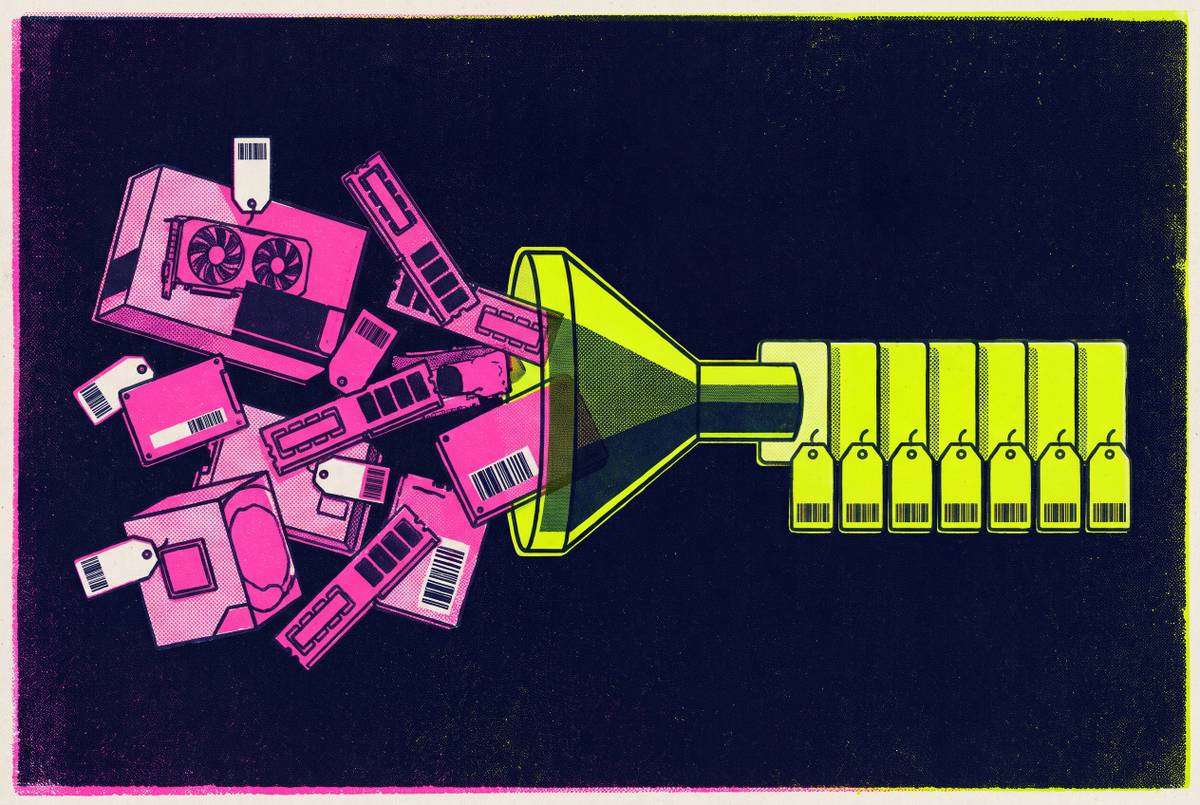
An open-source PC parts database for community builders needs more than a public parts list. It needs reusable data, shared compatibility rules, and governance that protects contributors’ work. “Contributor Ecosystems for Open Hardware Data Projects” explains how those mechanics keep a project useful. Community maintenance alone does not prove that a compatibility tool is unbiased or free from sponsor influence.
What open hardware data ecosystems actually are and why their contributor mechanics determine their fate
Open hardware data spans two overlapping tiers. Hyperscale infrastructure brings institutional contributors together under neutral governance, while consumer hardware relies on volunteers spread across the community and the norms they share. The participants have different resources and reasons to contribute. Yet both turn individual expertise into specifications, compatibility tables, and benchmark results that other people can query. Coordinating those contributions requires getting them into a shared form and keeping them current.
A repository is only the starting point. Its value grows with the density of contributors and the currency of their data. More expertise can fill gaps, but only if the project gives that expertise somewhere useful to go. Governance sets who can change the rules, standards set whether entries fit together, and incentives shape whether people come back. A project can have capable technology and still stagnate because one of those arrangements fails.
How institutional mandates drive contribution at the hyperscale tier
The Open Compute Project Foundation describes its mission as bringing at-scale innovations and hyperscale best practices to all, from silicon to systems, data center facilities, and the grid. Its community includes hyperscale operators, neocloud providers, communications providers, colocation operators, diverse enterprises, and technology providers. That range makes coordination a central task. Organizations with different business interests need a way to share work without putting it under another member’s control. Neutral governance supplies that basis.
OCP’s Collaboration Acceleration Fund makes the exchange explicit. Launched in April 2026, the non-equity grant program provides resource matching up to 50%, and all funded outcomes must return to the OCP Community under approved open licenses. The license requirement anchors the arrangement. Members can invest in pre-competitive work with a defined route from funded development to shared output.
OCP’s April 2026 announcement named approved contributions including the Open Rack Wide specification, Foundation Chiplet System Architecture, Next Generation ML Infrastructure Design Principles, and reference architectures for building AI clusters. The shared structure supports more than one narrow project. It also explains the economic logic of this approach, because common specifications and reference work reduce duplicated research and development. Organizations contribute not only to make their own expertise available, but also to benefit from work they would otherwise have to repeat.
Why volunteer-driven consumer hardware data is structured so differently — and what sustains it
Build guide maintainers, tier-list curators, and survey analysts are largely unpaid, sustained by usefulness, community reputation, and, in some cases, advertising revenue. A contributor adds a specification or corrects a compatibility table because accurate information helps with a build and earns standing among other builders. That motive can make the work responsive to practical needs, but it does not guarantee continued maintenance.
The incentive also shapes what gets produced. A guide or tier list gives its maintainer a visible way to share expertise, while a specification repository makes that expertise reusable by other tools. Both can serve the community, but they are not interchangeable. A recommendation explains a judgment, whereas a structured record can support queries across many parts. Advertising revenue can help sustain the surrounding work, but neither that revenue nor community authorship establishes that the resulting recommendations are unbiased.
Valve’s Steam Hardware Survey offers a different kind of contribution to this information landscape. It shows aggregate install bases across the PC gaming population, making it a signal of which hardware generations people actually run. It is closer to a census than a compatibility database. Its usefulness comes from observing ownership. This distinction prevents a common confusion at the consumer tier, where popularity data, build advice, and parts specifications can look like substitutes despite answering different questions.
What happens when governance fails — the license and fork problem
Contributors invest under an expectation that the rules will remain dependable. If one controlling actor can change the license or terms after that investment, the project’s apparent openness rests on a business decision. The damage is not necessarily technical. A repository may still function while contributors lose confidence in who controls it and what will happen to their work. A fork can then become a governance response, preserving shared work under a different steward.
OCP’s non-equity funding and license-back requirement address that risk by placing funded outputs under approved open licenses instead of leaving access to a member’s later discretion. At the consumer tier, control is often less formal and more concentrated. A guide or tier list run by one person or a small team can go dark, become paid, or change methodology without warning. Even without a license dispute, dependence on a single maintainer can leave a community with no dependable way to continue its work.
Open silicon exposes a related limit of permission alone. Anyone can implement RISC-V, but community-wide proof of correctness remains an unresolved problem, and subtle compliance bugs can cause hard-to-debug failures downstream. RISE’s RISC-V Runners provides a concrete response through a free, managed GitHub Actions runner service that gives open-source projects access to real RISC-V hardware in CI pipelines. It supplies testing infrastructure that contributors need to make openness useful.
Data standards as the infrastructure beneath contributor participation
Stable governance allows people to contribute with confidence, and making incompatible records work together requires a schema of shared fields and rules that give each entry a consistent form. Communities may use different field names for the same specification, use different units, or account for different compatibility edge cases. Merging their tables then requires manual reconciliation before a downstream tool can rely on them.
Schema is therefore a governance decision. Requiring structured fields at the point of contribution defines what the project accepts and what work contributors must do. In return, people can query their entries alongside other entries without having to work out what they mean each time. Free-text descriptions may contain useful expertise, but accepting them in place of required fields accumulates ambiguity. A project that leaves this unresolved shifts the burden from its contribution process to every builder or tool trying to use the data.
OCP’s contribution process produces specifications, white papers, and reference architectures that define the form of shared work. Its April announcement included the Open Rack Wide specification, Foundation Chiplet System Architecture, and ESUN networking requirements as examples of standards-led contribution. These are not consumer parts tables, but the underlying discipline is comparable. Thales’s open-sourcing of CVA6 “Safe” components under OpenHW Foundation governance shows the same link between structured technical work and shared stewardship. The dual-core lock-step core is used in safety-critical environments including automotive, aerospace, and medical, where having a common framework for contributions matters especially.
What can an open-source PC parts database do for community builders — and where are the gaps?
For a community builder, the practical payoff is knowing more before buying. Tier lists and build guides that the community maintains group choices by budget and show what other builders choose. A parts database can support a different outcome by turning specifications and compatibility rules into queries. A useful comparison rests on identifiable criteria, including reusable data, structured fields, public methodology, current coverage, and governance that does not depend on one maintainer.
Those criteria do not amount to a sponsor-independence guarantee. A public specification table can make factual inputs inspectable, but a recommendation still depends on the method used to interpret them. For the buyer asking which compatibility tool has transparent, unbiased data, the evidence needs to separate access to the underlying records from openness about the recommendation method. The material here establishes only those criteria.
The survey shows why that separation is necessary. Its structural bias is toward existing owners rather than people about to buy, so an install-base figure cannot serve as a direct buying recommendation. In February 2026, the RTX 5070 spiked to an unusually high share before March data corrected it. Sampling artifacts can distort the apparent picture. Treating such a result as a real-time market signal gives an aggregate observation more authority than its method supports.
Dimensional data brings the consequences closer to the build itself. Consumer 3D simulation tools can use parts specifications and compatibility rules to represent case dimensions, GPU clearance, cooler clearance, radiator space, and desk footprint across form factors from SFF/Mini-ITX through full tower. A simulation cannot outrun its underlying records. When dimensions are missing or compatibility fields are incomplete, it can tell a builder less, however convincing the display looks. When the database is stale or poorly structured, a clearance mistake can survive the query that should have caught it.
What sustains contributor participation over time — and what kills it
Contributors need evidence that their work is used. Seeing data queried, referenced, or built upon creates a feedback loop that an opaque repository cannot provide. OCP Nexus was launched to make 15 years of open hardware knowledge easier to explore, linking discovery with the value of accumulated contributions. People who can find and use prior work give its contributors a clearer reason to keep adding to it.
Recognition supplies another return on time spent contributing. OCP’s community groups, including Women in OCP, consumer hardware reputation, and open-source attribution all give participation a visible place in a community. But recognition must not become control by the largest contributor. At the institutional tier, capture begins when one member dominates the shared repository and pre-competitive neutrality erodes. Distributing recognition and decision-making gives other members a reason to keep participating.
A guide or database dependent on one maintainer is vulnerable to that person’s departure, whatever the quality of the existing work. Distributed maintenance and publicly documented schema and methodology make continuation possible without requiring someone to reconstruct the project from scratch. Stable rules reward the effort of learning them. Tooling also needs to make high-quality contribution tractable, as the RISC-V testing infrastructure illustrates.
Publishing what changed, why it changed, and what remains incomplete respects contributors who already know where the gaps are. Hiding the gaps weakens the trust people need to work together to fill them. Across both tiers, durable participation depends on visible use, dependable governance, usable standards, recognition, and practical support for the work. These are knowable, replicable conditions that projects can design.